
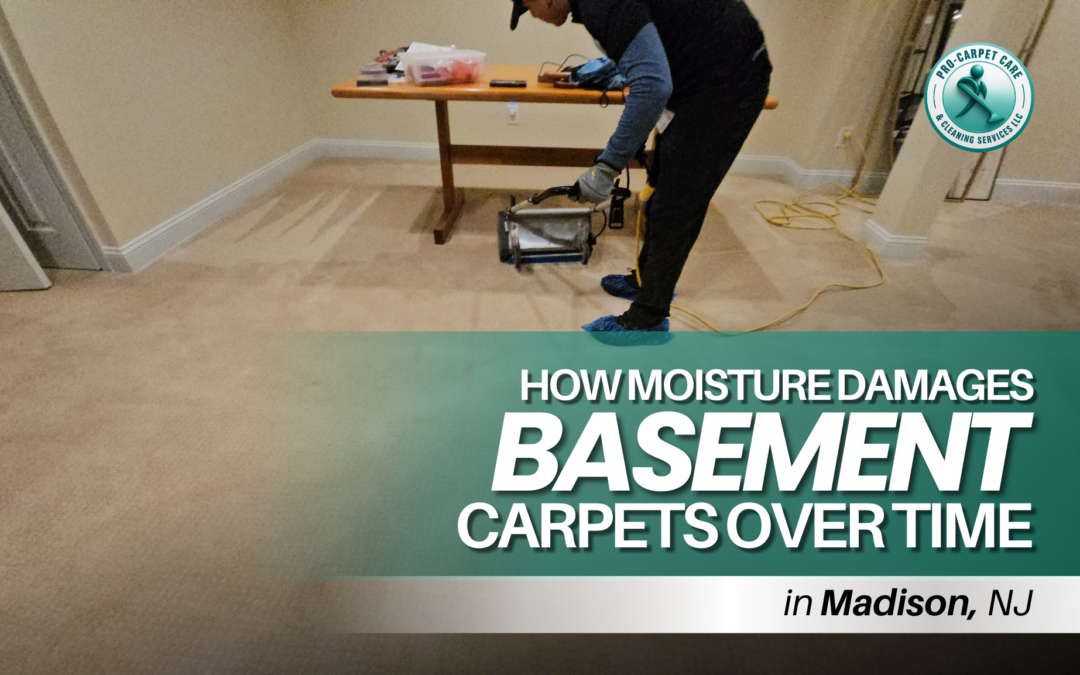
How Moisture Damages Basement Carpets Over Time
Basements are naturally more vulnerable to humidity and moisture than other areas of a home. Over time, even small amounts of trapped moisture can cause serious damage to basement carpeting. Understanding how moisture affects your carpet can help you prevent costly repairs and protect your indoor air quality.
Why Basements Are More Prone to Moisture
Basements sit below ground level, which makes them more susceptible to:
- Groundwater seepage
- Foundation cracks
- High humidity levels
- Poor ventilation
- Winter snowmelt intrusion
Even when flooding isn’t visible, excess humidity can slowly penetrate carpet fibers and padding underneath.
GET A FREE ESTIMATE TODAY!
What Happens When Moisture Gets Into Basement Carpet
Moisture damage doesn’t usually happen overnight. It develops gradually and affects multiple layers of the flooring system.
1️⃣ Carpet Fibers Break Down
Prolonged dampness weakens carpet fibers, causing them to lose texture, structure, and resilience. You may notice matting or uneven wear patterns.
2️⃣ Padding Absorbs and Traps Water
The carpet pad underneath acts like a sponge. Once saturated, it holds moisture against the subfloor, creating the perfect environment for microbial growth.
3️⃣ Mold and Mildew Growth
Basement environments are already humid. When moisture becomes trapped beneath carpet, mold spores can develop within 24–48 hours under the right conditions.
4️⃣ Persistent Musty Odors
A musty smell is often the first sign of hidden moisture damage. Odors typically indicate bacterial or mold activity beneath the carpet surface.
What We Clean
Our Services:
Steam Carpet Cleaning
Area Rug Cleaning
Upholstery Cleaning
Tiles & Grout Cleaning
Wood Floor Cleaning
VCT Stripping Waxing
Professional Cleaning For Home Sellers
Get Your Home Market-Ready with Professional Cleaning
Dusty carpets, stained upholstery, grimy tiles, and worn-out hardwood floors can leave a negative impression, making it harder to sell your home quickly and at the best price. Investing in deep cleaning services removes built-up dirt, odors, and imperfections, enhancing your home’s appeal and helping it stand out in a competitive market. Learn More…
Can Vacuuming Fix Moisture Damage?
No. Vacuuming only removes surface debris. It does not extract moisture trapped in the carpet pad or subfloor. In fact, ignoring underlying moisture can allow damage to worsen over time.
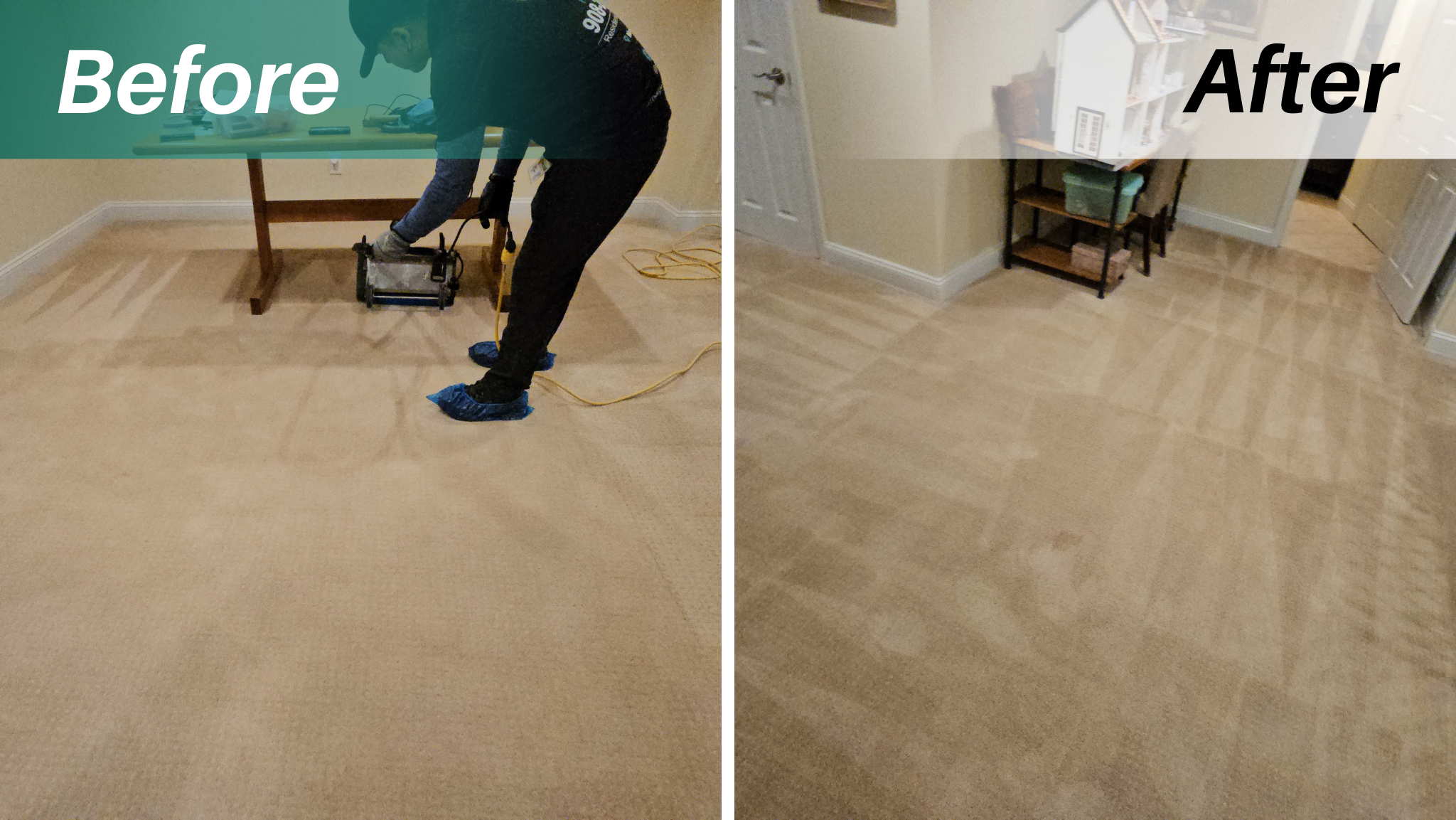
Professional basement carpet cleaning uses extraction methods designed to remove deep moisture and reduce microbial risk.
When Professional Basement Carpet Cleaning Is Necessary
Professional service is strongly recommended when:
- The carpet has been exposed to flooding
- Odors persist despite cleaning
- You notice visible mold or staining
- The basement feels consistently humid
Deep extraction equipment removes moisture from both the carpet and underlying pad, helping prevent long-term structural damage.
Preventing Moisture Damage in Basement Carpets
Prevention is more cost-effective than replacement. Consider:
- Using a dehumidifier year-round
- Sealing foundation cracks
- Ensuring proper drainage around the home
- Scheduling periodic professional carpet cleaning
- Acting quickly after water exposure
Routine maintenance significantly extends the lifespan of basement carpeting.
Is Replacement Sometimes Necessary?
If mold has spread extensively into the padding and subfloor, carpet replacement may be the safest option. However, early intervention with professional cleaning can often restore carpets before severe structural damage occurs.
Hardwood floor services:
Our Latest Videos:
-
- Carpet Cleaning | Pet Urine Removal in Basking Ridge NJ
- Water Stain Removal After Carpet Flooding in Basking Ridge, NJ
- Commercial Carpets & Hardwood Floor Cleaning | Dental Offices in Summit NJ
- Beautfiful Hardwood Floor Transformation with Cleaning & Recoat – Westfield, NJ
- Crate & Barrel Sofas Deep Cleaning Berkeley Heights NJ
FAQs About Basement Carpet Moisture Damage
How quickly can mold grow under basement carpet?
Mold can begin developing within 24–48 hours in damp conditions.
Can I dry wet basement carpet with fans?
Fans may dry surface fibers, but they rarely remove moisture trapped in the padding or subfloor.
How often should basement carpets be professionally cleaned?
Basement carpets should be professionally cleaned at least once a year, especially in humid climates or flood-prone areas.